President Donald Trump signed an executive order on Thursday, August 7, potentially allowing alternative assets, such as private equity, cryptocurrencies, and real estate, to be included in 401(k) retirement accounts.
In a White House press release, the order directs the U.S. Secretary of Labor to review fiduciary guidance under the Employee Retirement Income Security Act of 1974 (ERISA) and clarify the Department of Labor’s position on including alternative assets in retirement plans.
Today, @POTUS signed an Executive Order to ensure that Federal regulators do not promote policies and practices that allow financial institutions to deny or restrict services based on political beliefs, religious beliefs, or lawful business activities, ensuring fair access to… pic.twitter.com/Xkk9F4uHPo
— The White House (@WhiteHouse) August 7, 2025
It also instructs the Securities and Exchange Commission to revise rules to facilitate access to such investments in participant-directed defined-contribution plans.
“A combination of regulatory overreach and encouragement of lawsuits filed by opportunistic trial lawyers has stifled investment innovation,” Trump stated in the order. “My administration will relieve the regulatory burdens and litigation risk that impede American workers’ retirement accounts from achieving the competitive returns and asset diversification necessary to secure a dignified, comfortable retirement.”
Crypto Market Rallies Over Potential for Retirement Reform
The executive order marks a significant win for the alternative asset industry, especially the digital currency sector, by potentially unlocking a massive influx of retirement capital into private equity, real estate, and cryptocurrencies.
The immediate market reaction was notably bullish. Bitcoin climbed approximately 2%, trading above $117,300, its highest level since the end of July.

Source: TradingView
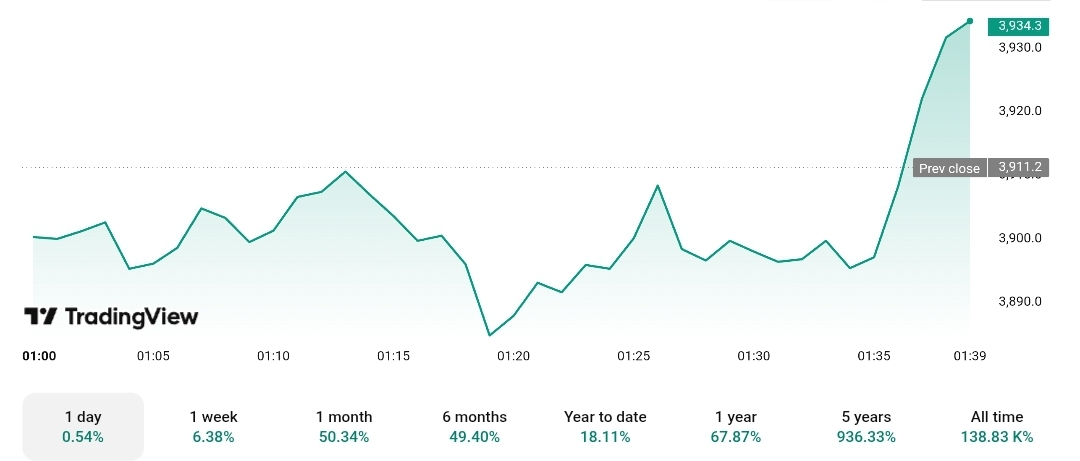
Ethereum surged over 5%, breaking past the $3,870 threshold. At the time this article was published, ETH was trading at over $4,000.
Source: TradingView
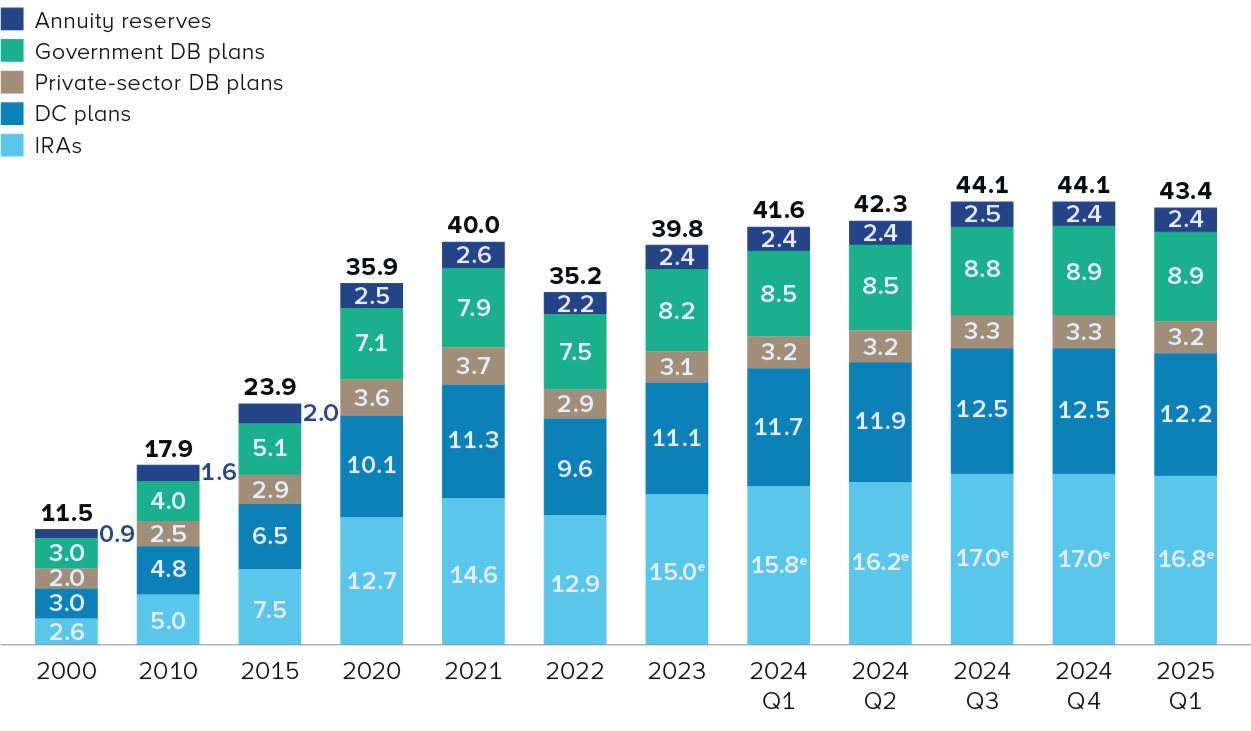
According to ICI’s Quarterly Retirement Market Data for Q1 2025, Americans held $12.2 trillion in all employer-based defined-contribution (DC) retirement plans as of March 31, 2025, of which $8.7 trillion was in 401(k) plans.
Source: ICI
Detractors Warn That Crypto Remains a Risky Bet for Retirement Products
Supporters argue that incorporating crypto into retirement plans could diversify portfolios and boost potential returns, particularly for younger savers, while positioning the U.S. as a leader in financial innovation.
David Layton, CEO of Partners Group, a pioneer in private markets offerings for defined-contribution plans since 2015, welcomed the news.
“Ultimately, this will create greater parity between the investment options and retirement outcomes available to beneficiaries in DB and DC plans. Private markets are stewards of an increasing portion of the real economy, so it is imperative that they are accessible to all investors,” he said.
Industry giants are already moving to capitalize on the change. In June, BlackRock, the world’s largest asset manager, revealed its plans to launch a 401(k) target-date fund in early 2026 with a 5% to 20% allocation to private investments.
In May, Empower, the second-largest U.S. retirement plan provider, announced it would begin allowing private assets in certain accounts later this year.
We are pleased to announce that Empower will now offer private markets investments to retirement plans. This landmark initiative is designed to provide individuals access to a broader range of investment options, enabling them to further diversify their portfolios and potentially… pic.twitter.com/HPedl4fQJO
— Empower (@EmpowerToday) May 14, 2025
While BlackRock initially traded higher after the announcement, it closed lower by 0.69% on Thursday.
Critics, however, warn that expanding access to riskier, less transparent investments could expose retirees to significant losses. Senator Warren, in her June 18, 2025 letter, has pressed plan providers on how they intend to safeguard investors, citing “weak investor protections, lack of transparency, expensive management fees, and unsubstantiated claims of high returns” in the private asset sector.
Additionally, a recent Better Markets report warned that U.S. public pensions investing in crypto pose “one of the most pressing threats” to retirement systems, noting over 20 states have moved to allow such allocations.
For now, Trump’s order represents a dramatic policy shift that could reshape the retirement investment landscape, tilting it toward higher-risk, higher-reward assets.