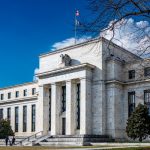
The Fed Chair sent stocks higher after his dovish tone on rates at Jackson Hole.
Stocks finished last week strong, fueled by what investors viewed as a dovish speech by Fed Chair Jerome Powell on Friday on interest rates.
In his address at the high-profile Jackson Hole Economic Symposium, Powell indicated that it may be time for less restrictive monetary policy – or, in other words, to lower interest rates. While he did not outright say the Fed would lower rates at the FOMC’s next meeting on September 16-17, he alluded to rising risks in the labor market and with inflation.
“Overall, while the labor market appears to be in balance, it is a curious kind of balance that results from a marked slowing in both the supply of and demand for workers,” Powell said at Jackson Hole. “This unusual situation suggests that downside risks to employment are rising. And if those risks materialize, they can do so quickly in the form of sharply higher layoffs and rising unemployment.”
Job growth has slowed to an average of 35,000 per month over the past three months, down from 168,000 per month during the same period in 2024.
Conditions “may warrant” a policy adjustment
Powell also noted that the GDP has slowed, due to a decline in consumer spending, and inflation is rising.
“The effects of tariffs on consumer prices are now clearly visible. We expect those effects to accumulate over coming months, with high uncertainty about timing and amounts. The question that matters for monetary policy is whether these price increases are likely to materially raise the risk of an ongoing inflation problem,” Powell said.
In summary, Powell said the risks to inflation are tilted to the upside, while the risks to employment are leaning toward the downside, which he termed a challenging situation.
“When our goals are in tension like this, our framework calls for us to balance both sides of our dual mandate. Our policy rate is now 100 basis points closer to neutral than it was a year ago, and the stability of the unemployment rate and other labor market measures allows us to proceed carefully as we consider changes to our policy stance,” Powell said. “Nonetheless, with policy in restrictive territory, the baseline outlook and the shifting balance of risks may warrant adjusting our policy stance.”
This acknowledgement sent the Dow Jones Industrial Average almost 900 points higher on Friday, while the S&P 500 gained about 100 points and the Nasdaq climbed about 400 points.
“Ready to cut” rates
While there are still several weeks to go, and much economic data to come in, including consumer confidence on Tuesday and personal consumption expenditures (PCE) inflation on Friday, investors are optimistic about a September rate cut.
“Powell did something that no one thought he would – he went ahead and signaled that the Fed is ready to cut interest rates at their next meeting,” Chris Zaccarelli, chief investment officer for Northlight Asset Management, said. “It’s no surprise that markets reacted with glee and both stock and bond investors will be happy if prices close this afternoon at the levels they are now trading.”
Some 86% of interest rate traders now expect a 25-basis point rate cut in September, according to CME FedWatch.
“Jerome Powell’s comments today were more dovish, than many, including myself expected,” Larry Tentarelli, chief technical strategist for Blue Chip Daily Trend Report, said. “Our view has been that the Fed would prioritize the labor market more than inflation concerns and that is what Powell indicated today. Our view is to expect a September rate cut and sectors that should benefit the most include home construction, small caps and banks.”
The Nasdaq Composite was trending higher on Monday, but the Dow Jones and S&P 500 were moving lower. With PCE inflation, consumer confidence, and NVIDIA earnings on tap this week, it will be interesting to see if the rally can continue.