
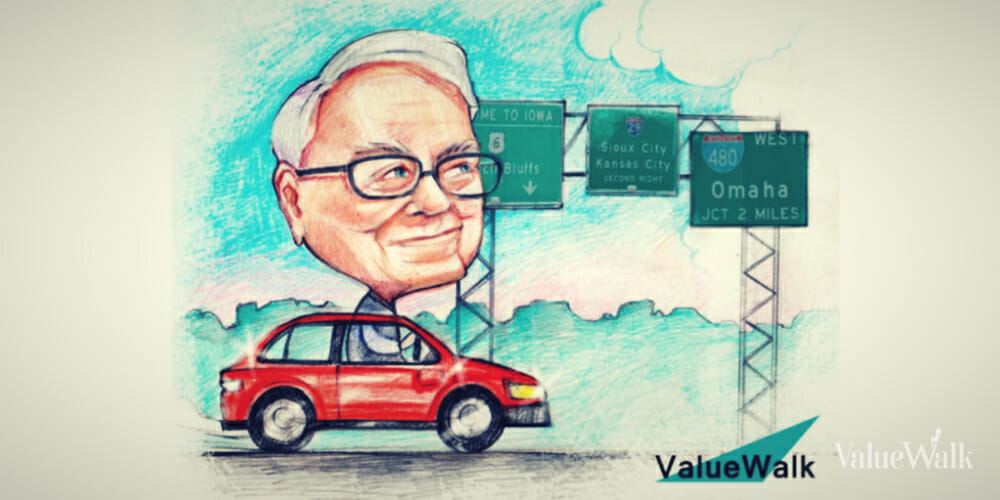
Warren Buffett’s Berkshire Hathaway loaded up on its own stock
Warren Buffett’s Berkshire Hathaway bought almost $13 billion worth of its own stock during the third quarter, amounting to more than 45 million shares at an average price of about $206. The was the largest stock buyback ever in the company’s history. In the previous quarter, the conglomerate bought $5.1 billion worth of its stock, marking a record buyback at that time.
According to Yahoo! Finance, there’s speculation that Buffet repurchased another $2.4 billion worth of Berkshire Hathaway shares in October because they fell even more between Sept. 30 and Oct. 26. It’s not uncommon for companies like Berkshire to buy back their stocks when they feel they are undervalued or when sentiment has become bearish.
Dan Loeb quotes Warren Buffett in a letter after blasting him in 2015
Dan Loeb of Third Point had harsh words for Warren Buffett in 2015 when he called him a hypocrite. However, in a recent activist letter to Walt Disney Company, he quoted the “Oracle of Omaha.”
Business Insider reports that Loeb referenced a 1979 quote from Buffett saying that “companies get the shareholders they deserve.” He called on Disney to stop paying dividends and pour the money into its Disney Plus streaming service instead. He added that the company “deserves growth-minded, long-term oriented investors,” and he believes a strategy that revolves around using the company’s resources to drive growth in its streaming business will attract them.
In 2015 during the SkyBridge Alternatives Conference, he said he loved reading Warren Buffett’s letters and “contrasting his words with his actions.” He noted that Buffett criticized hedge funds, but he had the first hedge fund, and he criticizes activists, but he was the first activist. He also said that the Berkshire Hathaway boss “has a lot of wisdom” but that “we need to be aware of the disconnect between his wisdom and how he behaves.”
“Successful Investing takes time, discipline and patience. No matter how great the talent or effort, some things just take time: You can’t produce a baby in one month by getting nine women pregnant.” — Warren Buffett
Referred to as the “Sage” or “Oracle” of Omaha, Warren Buffett is widely viewed as one of the most successful investors in history. Buffett’s Berkshire Hathaway conglomerate is one of America’s largest companies and has dozens of subsidiaries, including in railroads, insurance, and energy, Berkshire Hathaway posted $182 billion in 2013 revenue and $19.5 billion in net income. Buffett moved to 3rd richest on Forbes’ 2015 list of the world’s richest, up 4th richest in 2014 but he is still inking big deals, Buffett’s Berkshire Hathaway bought battery maker Duracell from Procter & Gamble in November 2014 for $4.7 billion.
Beginnings
A generous philanthropist, he bested his own giving record in July 2014, giving away Berkshire shares worth $2.8 billion, primarily to the Bill & Melinda Gates Foundation but also to his children’s foundations, bringing his lifetime giving to nearly $23 billion. Buffett says his best investment was buying Benjamin Graham’s book “The Intelligent Investor” in 1949. He later studied under Graham before moving home to Nebraska and acquiring a struggling textiles company in 1962, Berkshire Hathaway. In early February 2015, it was the fourth most valuable public company in the U.S. with a market capitalization of $355 billion.
Warren Buffett was born in Omaha in 1930 and started his early education in Omaha Rose Hill Elementary School. His father’s, Howard Buffett and was a U.S. representative and was a harsh critic of New Deal interventionist foreign and domestic policy. Buffett’s father was first elected as a the member of Congress in 1942, a year after Buffett brought his first stock.
Early life
During 1941, when Warren Buffett was just 11 years old, he brought his first stock; 6 shares of Cities Service preferred stock [3 shares for himself, 3 for his sister, Doris], at a cost of $38 per share. The company falls to $27 but shortly climbs back to $40. Warren & Doris sell their stock. Almost immediately, it shoots up to over $200 per share.
Afterward, Buffett moved with his family to Washington, DC and was enrolled at Alice Deal Junior High School, where he finished his elementary school. In 1944, he filed his first income tax return.
Washington Post
By 1945, Warren, is making $175 monthly delivering Washington Post newspapers. At the age of just 14 he has saved more than $1,200 and used this money to buy 40 acres of farmland. In 1947, his senior, Buffett decided to invest $25 with a friend to buy a pinball machine and put it in a nearby barbershop. Within few months, their business started to grow and from that one machine, they were able to save enough money to buy more machines.Within months, he owns three machines in three different locations. The business is sold later in the year for $1,200 to a War Veteran.
In 1950, when he was only 20 years old, he saved $19,800. In 1952, he went to GEICO insurance company in Washington, DC. There he met its Vice President Lormer Davidson and with him he discussed the insurance business. GEICO still plays an important role in Buffett’s investment life as it is a major investment in Berkshire Hathaway.
GEICO
After high school, Buffett went on to graduate from Columbia University. First, he wanted to work for Wall Street but later decided to work in Omaha as a stockbroker and also took Dale Carnegie’s course on public speaking. This course enabled him to teach the “Investment Principles” at the Omaha University. Most of his students were almost twice his age. While teaching he was able to purchase a Sinclair Texaco gas station. Unfortunately, this turns out to be an unsuccessful investment.
In 1952, he was employed in Benjamin Graham’s partnership. His initial salary at that time was $12,000. Benjamin Graham retired in 1956 and with that the partnership ended. Buffett’s savings were more than $174,000. Then he started Buffett Partnership Ltd in Omaha.
Warren Buffett meets Ben Graham
In 1957, the firm grew to three partnerships. In 1959, there were six partnerships operating and by 1960, he had seven partnerships operating as Buffett Associates, Buffett Fund, Dacee, Emdee, Glenoff, Mo-Buff and Underwood. Then eleven doctors invested $10,000 in the partnership.
Warren Buffett Timeline
When Buffett’s early partnerships first got off the ground, Buffett couldn’t stand people criticizing him if stocks went down, so he only invited his friends and family into the first partnership. The first Buffett Associates, Ltd. partnership had $105,100 in capital. He had six partners plus himself, which brought the total to seven people.
Warren Buffett: Buffett Partnerships
The compensation formula was simple. The investors received 4% interest on their money from the partnership. After that threshold, Buffett got 50% of the gain, and the limited partners got the other 50%. If there were a loss, Buffett took 25% of it himself. That means if he broke even; he lost money. His obligation to pay back losses was not limited to his capital; it was unlimited.
Buffett also had a little partnership with his father, called Buffett & Buffett, on which he charged no fee.
It was in the years that followed that Warren started establishing other investment partnerships. On September 1st, 1956, he raised $120,000 from Homer Dodge, a physics professor who had attended Harvard University. With it, Buffett setup Buffett Fund, Ltd. This second fund had more money than the Buffett Associates, Ltd. partnership.
Partnership returns
Then, on October 1, 1956, Warren founded another partnership for a friend of his, John Cleary, who was his father’s secretary in Congress. (Buffett’s father served in the House of Representatives.) It had $55,000 in capital.
In June of 1957, Buffett started another partnership called Underwood, which was setup by one of the original partners of Buffett Associates, Ltd., Elizabeth Peters, with $85,000.
It wasn’t until next year, on August 5, 1957, that Buffett started what was actually his fifth partnership, excluding Buffett & Buffett with his father, which was called Dacee. Eddie Davis and his wife Dorothy Davis had Buffett manage $100,000 for themselves and their three children.
On May 5, 1958, Dan Monen and his wife, Mary Ellen, formed the basis of Warren’s next partnership, called Mo-Buff. They put in $70,000.
Early investors
The seventh Buffett partnership was called Glenoff, and consisted of $50,000 contributed by a local businessman and two sons in one of Omaha’s most prominent families. It was established in February of 1959.
By 1959, Buffett, who had only contributed $100 to each partnership, had earned fees, counting reinvested earnings, of $83,085 and owned approximately 9.5% of the combined partnerships due to his performance.
During these early years, Warren Buffett was a classic value investor and generally brought companies trading way below intrinsic value. He had three main strategies: Firstly, Buffett has his “generals”, which were usually undervalued securities where he had nothing to say about corporate policies. Generals made up the bulk of Buffett’s portfolio. Then there were the “work-outs”, which were undervalued securities where corporate action was required for the market imbalance to correct itself. And finally the “control” situations where Buffett aimed to influence policies of the company in order to unlock value.
Commonwealth Bank
One of his first investments was Commonwealth Bank. And if you read that early partnership letter, you’ll see that Warren Buffett wasn’t interested in it only because it was cheap. He thought that the bank was a high quality bank that was growing intrinsic value over time. Here is how he summarized his thoughts on this particular stock in 1959, which he felt had a current intrinsic value of $125 per share:
“So here we had a very well-managed bank with substantial earning power selling at a large discount to intrinsic value… we had a combination of 1) Very strong defensive characteristics; 2) Good solid value building up at a satisfactory pace, and; 3) Evidence to the effect that eventually this value would be unlocked although it might be one year or ten years. If the latter were true, the value would presumably have been built up to a considerably larger figure, say, $250 per share.”
Buffett and Dempster Mill
Another early investment was Dempster Mill Mfg. This was in fact a “general” that became a “work-out” and then transformed into a “control” situation. Dempster stock was first acquired for Buffett’s partnerships during 1956, at a time when the company’s stock was trading at $18. Book value stood at $72 per share, with $50 per share of current assets. Dempster had been a highly profitable company but when Buffett began buying, it was only breaking even. Between 1956 and 1961, Buffett sat on Dempster’s board of directors. Using this position, he was able to get to know Dempster inside out and quickly realised where the company was going wrong.And after this period of observation, Buffett made his move. With his partnerships holding 70% of Dempster’s outstanding stock, during 1961 Buffett replaced Dempster’s management team, cut costs and sold assets.
After a successful restructuring, which only lasted a year, during 1963 Buffett sold Dempster for around $80 per share. A total gain of 186% based on an acquisition cost of $28 per share.
During 1958 and 1959 Buffett made a huge bet. Thirty-five percent of partnership net assets were channeled into one investment; Sanborn Map Co. Sanborn was never a “general” situation. Buffett bought in with the intention of unlocking value from the business within a year.
Sanborn produced detailed maps of all cities of the United States, a business in which the company had a monopoly for around 75 years. Unfortunately, during the early fifties, its maps fell out favour and profits fell by 80% between the late 1930s and 1959.
Sandborn story
However, Sanborn had been busy building an investment portfolio since the late ‘30s. Buffett worked out that during 1958, Sanborn’s portfolio of securities was worth around $65 per share, although at the time Sanborn’s stock was trading at only $45 per share. As Buffett puts it:
“… [the] map business was evaluated at a minus $20 with the buyer of the stock unwilling to pay more than 70 cents on the dollar for the investment portfolio with the map business thrown in for nothing…”
Through various means, Buffett took control of around 50% of Sanborn’s outstanding stock and began to push for change. His plan was to separate Sanborn’s investment portfolio and re-energize the map business – there were still customers who were willing to pay for Sanborn’s services (the company still exists today). Eventually, this plan was pushed through.
While there’s no exact per-share selling price for the Sanborn trade, it’s reasonable to assume that Buffett netted at least $65 per share from sale of the investment portfolio. A gain for Buffett and his partners of 44% within a year.
Warren Buffett: Berkshire Hathaway
Berkshire Hathaway was originally one of Buffett’s deep value “work-out” situations, which due to Buffett’s ego, accidently became a “control” situation. I doubt he could have realized what the tiny textile company would become.
Buffett started buying Berkshire during 1962 at a price of $7.60 per share, a depressed price that reflected a lengthy restructuring. As usual, Buffett kept buying, working up an average cost of $14.86 per share during 1965. Berkshire had working capital of $19 per share.
Buffett takes over BRK
However, Berkshire’s management became uncooperative and refused to work with Buffett to unlock value. So, Buffett took control of the company and the Berkshire Hathaway we know today was born.
Buffett used money from Berkshire’s textile operations to purchase several insurance companies. He then stumbled on the idea of using the “float” from his insurance subsidiaries to invest elsewhere, mainly into focused stock picks that would be held for the long term. Buffett has long eschewed a diversified stock portfolio in favor of a handful of trusted investments that would be overweighted in order to leverage the anticipated return.
Today, Berkshire wholly owns GEICO, BNSF, Lubrizol, Dairy Queen, Fruit of the Loom, Helzberg Diamonds, FlightSafety International, and NetJets, owns half of Heinz and an undisclosed percentage of Mars Incorporated, and has significant minority holdings in American Express, The Coca-Cola Company, Wells Fargo, IBM and Restaurant Brands International.
Warren Buffett: Top money manager
Warren Edward Buffett is the top money manager of the twentieth century and the present times revealed in a survey conducted by the Carson Group that showed him ahead of Peter Lynch and John Templeton. In the Times Magazine, he was among the hundred most influential people of the world. United States President Obama gave him the Presidential Medal for Freedom.
According to the Foreign Policy’s 2010 report, he is the most prestigious thinker. Buffet said that his investors in Berkshire Hathaway are actually his business partners and expects them to invest wisely and invest in the long term and never invest in the short term in a company. Unlike most other businesspersons, Buffett wants his partners to have full control over their shares and never rely on brokerage firms.
He belongs to that sort of businessperson whom American people have a high regard for; he is a man who believes in values and not just money. Additionally, he wants to invest and work for further development of companies. He has also invested in companies such as Burlington railroad and Kraft Foods.
Investment philosophy
Buffett is from Benjamin Graham Schoolhouse of value investing. Value investors usually search for certificates having prices that are inexcusably very low as compared to their intrinsic value. For stocks to determine intrinsic value is very difficult as there is no method to find such figure. Most of the time the intrinsic value is estimated by probing the company’s fundamentals.
Most value investors are always hunting for the products that are utilitarian and prime quality, but are unfortunately sold at artificially low price. Experienced investors always seek such stocks whose worth is not deservedly assessed by the market.
Graham influence
However, Buffett has an entirely different investment approach in the market. The majority of investors do not support the efficient market hypothesis. Although they do understand that ultimately the undervalued stocks will become valuable once their intrinsic value is correctly assessed. He has entirely different views than those investors. He has no concern with the supply and demand of the market. Neither has any concern with the stock market activities.
“In the short term the market is a popularity contest, in the long term it is a weighing machine,” he said.
Buffet imitates a classic model of investment. According to Buffett, Benjamin Graham influences him. Graham is the true supporter of value investing and first come up with the idea of intrinsic worth. Buffet observes the company’s overall potential before he invests on its stocks. He does not seek early capital gain but company’s capability in the end to gain profits. Buffett’s main concern is the company’s capability to do business and continue to do it in the end.
Warren Buffett security analysis
To understand the outstanding features with price, he puts few questions for himself to analyze.
- The return on equity is sometimes seen as “stockholders” investment returns by disclosing the rate those shareholders are making income on shares. Buffett studies the ROE to detect the company’s operational capability by analyzing them with other companies in the same industry. Analyzing the return on equity of one year is not sufficient to have a complete picture of a company’s performance. To have good result, they should analyze five to ten years a company’s performance.
- Buffett consider debt equity ratio carefully. He prefers a little amount of debt over borrowed money so that the profits can be made from shareowners’ equity. The degree of proportion that the company employs to finance its assets; higher the ratio, greater the debt. A high degree of debt as compared to equity will result in unstable profits and large writes-off for interest. For more testing of a company, investors frequently employ debt for long term rather than full liabilities.
- The company is not considered a successful company unless it shows consistency in its profit margins. The profit margin is figured by dividing the total income by total sales. The investors should observe the trend of past five years for good indication of profit margins. When a company is doing good in business it is indicated by high profit margin. Increase in profit margins demonstrates effectual management and effective controls on expenses.
- He does not recognize companies who are not around for more than ten years. The technology companies, which are only around for few years are not in the list of investment companies. He only invests in a company that he completely understands, and he admits that he do not understands most of the technology companies these days.
- Ability or inability of any company to increase its level of value of shareholders entirely depends on its historical performance. But even good performance in the past do not guarantee equally same performance in future. The investor has to examine its historical performance to predict its coming future. Buffett is extremely good in analyzing the past performances.
- The reliance of a company’s product on its commodity is very significant to Buffett. If the company does not offer anything different than its competitor and only relys on indistinguishable products. Buffet forecast no future for such company. The term he uses for a company with a character that is difficult for any competitor to replicate is called an economic moat. Buffett believe that the broader the moat, the more difficult it will be for competitor to access.
- To be hundred percent sure that the companies are undervalued is the hardest part of investing, and Buffett is an expert at it. Before investing in a company the investor first has to assess the intrinsic company value by checking its fundamentals such as earnings, assets and revenues. Usually company’s intrinsic value is higher than the value of liquidation. For example if the company is sold today, its intangible value will not be included, like the brand name, because it is not described on the fiscal statements.
- Buffett assesses the intrinsic value of a company by comparing it with its present market capitalization. He measures the intrinsic value to not less than 25 %, which is higher than the market capitalization of company. Buffett views company with value. Buffett business success is in accurately assessing the intrinsic value of a company.
- It is interesting to note that Buffett invest in a way similar to when bargain hunters do the shopping. It shows his sensible and practical attitude in business. Such attitude of Buffett is obvious in his entire life. He does not live in a palace; he does not have huge collection of cars and does not even take a luxury car to work. This life style of Buffett is not without any critic, but he has proved himself a great success in the world of business. In 2004, he was the second richest man in the globe, with $40 billion according to Forbes 2004 report. The most important thing here to note is the fact that the most difficult thing for any value investor is to accurately assess the intrinsic value of a company.
Financial crisis
Buffett was criticized during 2007 – 2008. He was blamed for early allocation of capital that results in suboptimal business deals. His Berkshire Hathaway occurred losses of 77% in earnings throughout 2008 and many of his fresh deals seems to be losing large market.
The loss incited the SEC to ask that Berkshire develop “a more robust disclosure” and include components to evaluate the contracts. He helped Dow Chemical to pay $18.8 billion arrogate of Rohm & Haas. Therefore, he became the largest single shareowner in the group on his Berkshire Hathaway that supplied with $3 billion emphasizing his inherent role in current crisis in the market of equity and debt.
According to Forbes, he became the richest man in 2008 with $62 billion. He passed Bill Gates who was number one for thirteen years in Forbes list. Once again, in 2009 Bill Gates regained its previous position of number one with Buffett second in the list. Buffet could not sustain number one position due to loss of 25 billion in only 12 months in 2008- 2009.
2010s
In June of 2010, he supported the role of credit ratings agencies in the financial crisis of the U.S. According to Buffett, very few people really understand the bubble because there were a great deal of delusions.
In November 2011, Warren Buffett announced that in 8 months he bought approximately 5.5 % of International Business Machine stocks, which values approximately $11 billion. The rationality behind buying was that IBM could continue with most of their clients while the others are struggling.
Warren Buffett has not authored any books but there have been many books written about Warren Buffett. The closest thing to a book by Buffett is a collection of his shareholder letters compiled by Lawrence A Cunningham titled The Essays of Warren Buffett: Lessons for Corporate America
Books
- The Snowball: Warren Buffett and the Business of Life by Alice Schroeder
- Warren Buffett and the Interpretation of Financial Statements: The Search for the Company with a Durable Competitive Advantage
- The Essays of Warren Buffett: Lessons for Corporate America by Lawrence Cunningham
- Warren Buffett’s Management Secrets: Proven Tools for Personal and Business Success
- The Warren Buffett Way
- Buffett: The Making of an American Capitalist
- The Tao of Warren Buffett: Warren Buffett’s Words of Wisdom: Quotations and Interpretations to Help Guide You to Billionaire Wealth and Enlightened Business Management
- Warren Buffett on Business: Principles from the Sage of Omaha
- The New Buffettology: The Proven Techniques for Investing Successfully in Changing Markets That Have Made Warren Buffett the World’s Most Famous Investor
- Buffettology: The Previously Unexplained Techniques That Have Made Warren Buffett The Worlds
- Applied Value Investing: The Practical Application of Benjamin Graham and Warren Buffett’s Valuation Principles to Acquisitions, Catastrophe Pricing and Business Execution
Quotes
“The most important quality for an investor is temperament, not intellect. You need a temperament that neither derives great pleasure from being with the crowd or against the crowd.”
“I don’t look to jump over seven-foot bars; I look around for one-foot bars that I can step over.”
“In the short term, the market is a popularity contest. In the long term, the market is a weighing machine.”
“Diversification is a protection against ignorance. It makes very little sense for those who know what they’re doing.”
“If you aren’t willing to own a stock for ten years, don’t even think about owning it for ten minutes. Put together a portfolio of companies whose aggregate earnings march upward over the years, and so also will the portfolio’s market value.”
“The key to investing is not assessing how much an industry is going to affect society, or how much it will grow, but rather determining the competitive advantage of any given company and, above all, the durability of that advantage.”
Leverage is dangerous
“I’ve seen more people fail because of liquor and leverage — leverage being borrowed money. You really don’t need leverage in this world much. If you’re smart, you’re going to make a lot of money without borrowing.”
“The difference between successful people and really successful people is that really successful people say no to almost everything.”
“I will tell you how to become rich. Close the doors. Be fearful when others are greedy. Be greedy when others are fearful.”
“Long ago, Ben Graham taught me that ‘Price is what you pay; value is what you get.’ Whether we’re talking about socks or stocks, I like buying quality merchandise when it is marked down.”
“It takes 20 years to build a reputation and five minutes to ruin it. If you think about that, you’ll do things differently.”
“Nothing sedates rationality like large doses of effortless money.”
Bull market physchology
“In a bull market, one must avoid the error of the preening duck that quacks boastfully after a torrential rainstorm, thinking that its paddling skills have caused it to rise in the world. A right-thinking duck would instead compare its position after the downpour to that of the other ducks on the pond.”
“The line separating investment and speculation, which is never bright and clear, becomes blurred still further when most market participants have recently enjoyed triumphs. Nothing sedates rationality like large doses of effortless money. After a heady experience of that kind, normally sensible people drift into behavior akin to that of Cinderella at the ball. They know that overstaying the festivities — that is, continuing to speculate in companies that have gigantic valuations relative to the cash they are likely to generate in the future — will eventually bring on pumpkins and mice. But they nevertheless hate to miss a single minute of what is one helluva party. Therefore, the giddy participants all plan to leave just seconds before midnight. There’s a problem, though: They are dancing in a room in which the clocks have no hands.”
Warren Buffett: Buffett Partnership Letters
- 1959-02-11 Letter
- 1960-02-20 Letter
- 1961-01-30 Letter
- 1961-07-22 Letter
- 1962-01- 24 Letter
- 1962-07-06 Letter
- 1962-12-24 Letter
- 1963-01-18 Letter
- 1963-07-10 Letter
- 1963-11-06 Letter
- 1963-12-26 Letter
- 1964-01-18 Letter
- 1964-07-08 Letter
- 1965-01-18 Letter
- 1965-07-09 Letter
- 1965-11-01 Letter
- 1966-01-20 Letter
- 1966-07-12 Letter
- 1966-11-01 Letter
- 1967-01-25 Letter
- 1967-07-12 Letter
- 1967-10-09 Letter
- 1967-11-01 Letter
- 1968-01-24 Letter
- 1968-07-11 Letter
- 1968-11-01 Letter
- 1969-01-22 Letter
- 1969-05-29 Letter
Warren Buffett: Letters to Berkshire Hathaway Shareholders
- Berkshire Letter written by Ken Chase (1970)
- To the Stockholders of Berkshire Hathaway Inc.: (1971)
- To the Stockholders of Berkshire Hathaway Inc.: (1972)
- 1973 Berkshire Letter
- 1974 Berkshire Letter
- 1975 Berkshire Letter
- 1976 Berkshire Letter
- 1977
- 1978
- 1979
- 1980
- 1981
- 1982
- 1983
- 1984
- 1985
- 1986
- 1987
- 1988
- 1989
- 1990
- 1991
- 1992
- 1993
- 1994
- 1995
- 1996
- 1997
- 1998
- 1999
- 2000
- 2001
- 2002
- 2003
- 2004
- 2005
- 2006
- 2007
- 2008
- 2009
- 2010
- 2011
- 2012
- 2013
- 2014
- 2015
- 2016
- 2017
- 2018
http://www.berkshirehathaway.com/letters/letters.html
Warren Buffett: Speeches and lectures
- Talk with University of Florida MBA students (transcript) (1998)
- Talk With Columbia MBA Students (2002)
- Talk with Harvard MBA students (article 1) (article 2) (2003)
- Speech and Q&A at Oquirrah Institute (2003)
- Talk With Wharton MBA Students (2003)
- Notes from Student from Visit With Buffett (2005)
- Talk With Vanderbilt MBA Students (2005)
- Talk With Tuck MBA Students (2005)
Warren Buffett: Videos
- 1962 Interview
- Best Advice for 2015
- Buffett uses ‘Civil War’ analogy on the euro
- Why Buffett is sticking with IBM
- Buffett goes Deere hunting, and traders follow suit
- How to think like Buffett
- Buffett On Investment Strategy
- Three pieces of advic
- Liz Claman interview
- Q&A
- How to Identify a Good Investment
- This is Always a Bad Investment
- There is Only One Type of Investment Risk
- Mr. Buffett the Teacher: Buffett Speaks to the Omaha
- Buffett Revealed Bloomberg Game Changers
- How to Turn $40 into $5 Million
- Buffett on Investing Small Sums
- Buffett & Gates on Success
- Tour Buffett’s office
- Buffett speaks to UGA students
- Buffett – The Book that Changed My Life
- Secrets of Buffett’s Investing Strategy – Stock Market Passive Income
- A Conversation With Buffett (Extended)
- Business Lessons From Billionaire Buffett
- On Why He’ll Never Sell a Share of Coke Stock
- What Buffett learned from Munger
- Life of
- Buffett and Carol Loomis (Tap Dancing to Work) interview by Charlie
- Ask Buffett: Realizing a mistake
- Buffett: 1 year after the crash
- Dan Gilbert interviews Buffett at Detroit Homecoming
Warren Buffett: Articles 1990 – 2015
- arren Buffett You Don’t Know
- Briefing Berkshire Hathaway: Playing out the last hand
- 15 reasons Buffett is $72 billion richer than you
- Buffett’s Berkshire to Be Largest Shareholder in New Kraft Heinz
- Buffett Talks Cars
- ‘Not a bad thing’ if Greece leaves the euro
- W Buffett just bought two small Virginia newspapers
- Buffett and 3G May Have One Barrier
- Buffett wins two ways on Heinz
- Why Buffett’s legendary run is coming to an end
- Ford CEO’s advice to Buffett
- Like J.P. Morgan, Warren E. Buffett Braves a Crisis
- Buffett to Give Bulk of His Fortune to Gates Charity
- ‘We Can Handle a $10 Billion Deal’
- Buffett Makes a Value-Growth Bet
- DEALBOOK; Buffett Buys 5.5% Stake In I.B.M.
- DealBook: Berkshire Amasses 5.5% Stake in I.B.M.
- CNBC’s Interview With Buffett
- One Secret Buffett Gets to Keep
- Berkshire Hathaway Reports Lower 3rd-Quarter Profit
- Gupta Charged With Securities Fraud Related to Goldman Tips
- Buffett Returns to Cartoonland, Joined by Jay-Z
- We Thought They Wanted to Be Like Buffett
- In Letter to Congressman, Buffett Claims 17.4% Tax Rate
- Others Go, But Buffett Stays on Side Of President
- Others Go, but Buffett Stays on President’s Side
- Buffett Takes His Case to Wall Street
- How to Mimic Berkshire’s Bet – Breakingviews
- DealBook Off the Record: I.P.O. Blues
- A Call for Fairness
- DEALBOOK; Higher Taxes And Less Pay, By Choice
- Bachmann Takes Aim at Buffett and Obama
- Obama Tax Plan Would Ask More of Millionaires
- For G.E., Repaying Buffett Looks Good — Breakingviews
- G.E. Will Pay Back $3 Billion to Buffett
- Berkshire Names Second Investment Manager
- The Enlightened Rich Want to Be Taxed
- Buffett Investment Could Erode Confidence in Big Banks
- Bank of America Sells Stake in China Construction Bank
- Bank of America Stake Viewed as a Seal of Approval
- Buffett to Invest $5 Billion in Shaky Bank of America
- Buffett’s Sweetheart Deal
- Bank of America Stake Is Viewed as a Seal of Approval
- Risks, Rescues and Remorse
- Invests $5 Billion in Bank of America
- Buffett’s $5 Billion Bet
- What Buffett Is Getting From His Bank of America Deal
- Buffett Adds Another Bank to His Portfolio
- Buffett’s Bathtub Fixation
- The Rich Can Afford to Pay More Taxes
- Wall Street Executive Speaks Out on Buffett and Taxes
- Buffett Calls On Congress to Raise Taxes on the Rich
- Buffett Takes Stake in Dollar General
- Even Berkshire Falls Short in Deal Battles
- S.&P. ‘Negative’ on Berkshire Hathaway
- The Week That Was, In Verse
- Tech-Wary Buffett Shies Away From Facebook
- Buffett Hearts Blankfein
- For Oracle of Omaha, No More Trips to Pine Valley
- New Filing Details Buys By Sokol
- Why Deal With Anyone Besides Buffett? .
- Buffett: The World’s Most Unassuming Billionaire .
- Invests In Dunkin’ Donuts
- Fresh Details on Berkshire’s Lubrizol Deal and Sokol
- A Standard That Raises More Questions Than It Answers
- DEALBOOK; Ruthlessness Is Oddly Absent
- The Materiality of Merger Negotiations
- The Unasked Question at Berkshire Hathaway
- Ruthlessness Is Oddly Absent on Sokol
- From Buffett, Excuses, Excuses, Excuses
- The Heir Who Won’t Be King
- The Sokol Drama Takes Hold of Tulane
- Abrupt Exit For a Leader At Berkshire
- The Curious Case of Sokol’s Departure
- Sokol’s Other Big Investment
- Curious Accusations in S.E.C.’s Insider Case
- Buffett Hints at Next Deal
- Securing Returns at Berkshire
- Who Are the Four Candidates to Succeed him?
- Buffett Versus Lampert, in Letters
- Buffett Plans to Buy Local, Investing Mostly in the U.S.
- As Berkshire Improves, Buffett Sings Praises of U.S.
- How Buffett’s Most Recent Big Deals Have Done
- Long After Fall, Countrywide’s Mozilo Defended His Legacy
- Berkshire Closes Out Its Bank of America Stake
- Berkshire to Pay $548 Million for Rest of Wesco
- Stock-Hedging Lets Bankers Skirt Efforts to Overhaul Pay
- Cutting Short Davos for a Black-Tie Bash in D.C.
- Working Wealthy Predominate the New Global Elite
- At Term’s End, Buffett to Leave Board of Washington Post Co.
- China’s BYD in Strategic Move for Tibet Miner
- Berkshire Makes Formal Bid for Wesco Subsidiary
- Buffett Offers to Buy Rest of Wesco Financial
- Buffett and Diller to Speak at Big Sky Summit
- Lou Simpson to Retire From Berkshire
- Buffett Filing Shows Details Of Holdings
- In Shaky Recovery, Pledging Fortunes Takes Extra Effort
- Prime Number
- Berkshire Profit Falls 40% on Derivatives
- Buffett Gets in a Bind Over Options
- Billionaires’ Pledge to Give Away Half Gains Followers
- Dairy Queen Chilly on Frozen Yogurt Lawsuit
- Microsoft Co-Founder to Give Away Half of His Fortune to Philanthropy
- Record Bill for Lunch With Buffett: $2.6 Million
Warren Buffett: Old articles 1990 – 1950
- Letter to Salomon Employees (1991)
- Articles about Buffett – New York Times (1990)
- And Now a Look at the Old One (1990)
- The Inside Story (1988)
- Letter to John Dingell: Early Fears About Index Futures (1987)
- Smart Money on the Sidelines (1986)
- Should You Leave It All to the Children? (1986)
- Briefcase Buffet Forms Own Business Dynasty . (1985)
- The Superinvestors of Graham-and-Doddsville (1984)
- Letters from Chairman Buffett (1983)
- Can You Beat the Stock Market? (1983)
- Something To Live For . (1977)
- How Inflation Swindles the Equity Investor (1977)
- BUSINESS Digest; Companies Energy The Economy Markets Today’… (1971)
- BUFFETT EXPLAINS INVESTMENT GOALS, Investors Buy Store Chain .(1966)
- The Jones Nobody Keeps Up With (1966)
- WEDDING IN OMAHA FOR DORIS BUFFETT (1951)