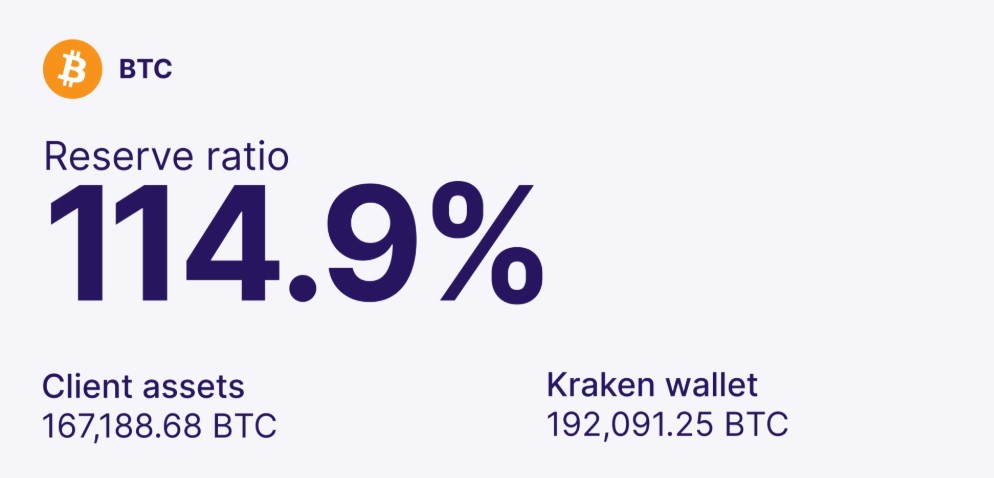
The latest Kraken Proof of Reserves 2025 audit confirms that the exchange holds more than enough assets to cover all customer balances, with Bitcoin reserves alone backed at 114.9%. Covering major cryptocurrencies including ETH, USDT, ADA, and SOL, the March 2025 report shows Kraken’s commitment to transparency and responsible custodianship.
Kraken Confirms 114.9% Bitcoin Backing in March 2025 Proof of Reserves
Kraken has completed its latest Proof of Reserves (PoR) audit, conducted in March 2025. The audit covered major assets including Bitcoin (BTC), Ethereum (ETH), Tether (USDT), Cardano (ADA), Solana (SOL), and others. It confirmed that Kraken holds more than the total balances of customer assets across these supported coins.
Most notably, the platform’s BTC reserves stood at 114.9% which shows overcollateralization.
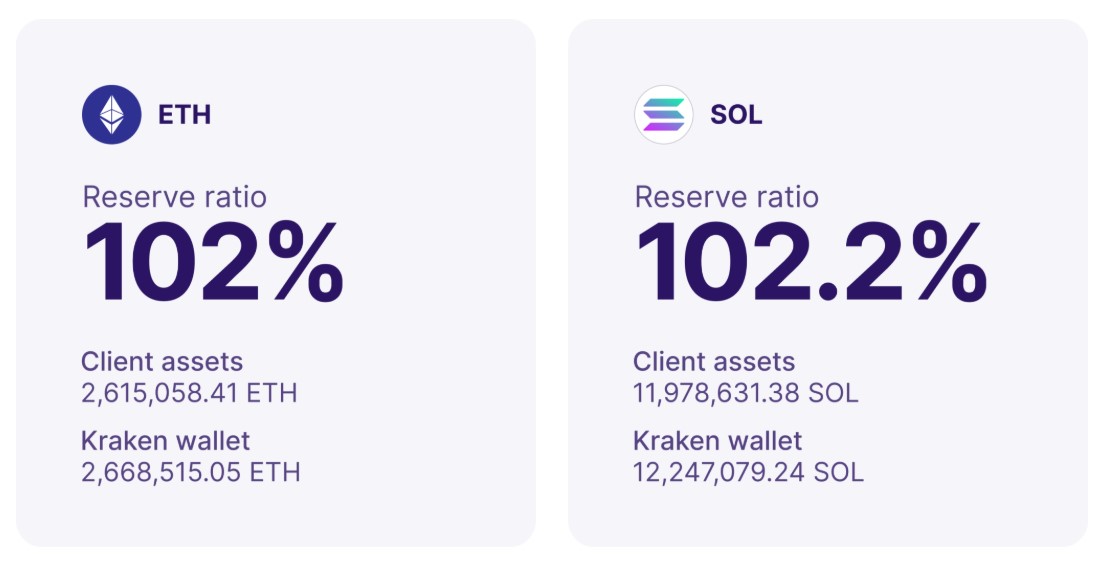
The latest report is part of Kraken’s ongoing commitment to crypto exchange transparency. The firm includes a broad scope of assets and liabilities, such as staked holdings, margin positions, and futures obligations.
These additional disclosures set Kraken apart from other platforms focusing only on spot balances. As a result, users receive a more accurate picture of whether the exchange can meet its obligations under stress or in volatile markets.
Kraken’s PoR Model Leads the Way in Exchange Transparency
Kraken’s Proof of Reserve process uses Merkle tree cryptography to allow clients to independently verify that their assets were included in the audit without compromising privacy. Each user receives a unique hash that corresponds to their balances, which they can then match against the Merkle root published by Kraken. This adds client-level visibility, something few exchanges offer.
A major point of differentiation in the March 2025 report is the inclusion of full liabilities, not just assets held in cold storage. This gives a complete view of the platform’s ability to meet customer withdrawals under any conditions. Many exchanges that claim to be transparent still withhold liability data or perform vague attestations through third-party accounting firms. Kraken’s approach pushes the industry toward higher standards by offering self-verifiable PoR report.
This model also highlights the contrasts in Kraken vs FTX transparency. Where FTX once used opaque internal controls that masked insolvency, Kraken leans into public-facing, auditable mechanisms that leave no room for ambiguity.
The Rising Importance of Proof of Reserves Post-FTX
The fall of major platforms like FTX and Celsius dealt a lasting blow to trust in centralized crypto services. Billions were lost after it became clear that customer funds were mismanaged, misrepresented, or commingled with corporate assets. These failures exposed a gap between what users believed they held and what exchanges could deliver.
Kraken began implementing PoR mechanisms in 2014, well before it became an industry talking point. This makes Kraken one of the best transparent crypto exchanges currently operating.
By producing clear PoR audits, Kraken shows that transparency isn’t a post-crisis add-on. This is an operational principle that protects users from hidden risk, and this distinction matters in today’s market.
Kraken Moves to Quarterly Proof of Reserves to Boost Trust
To maintain accountability and build on its existing disclosures, Kraken will now publish a Proof of Reserves report every quarter. This decision aligns with growing calls from users and regulators for more consistent updates from custodial platforms.
The quarterly cadence will be paired with traditional financial disclosures to provide a fuller view of Kraken’s balance sheet. This will make it easier for analysts and users to evaluate the platform’s standing. Upcoming reports will expand coverage to include a wider set of assets.
Crypto Custody Enters a New Era of Transparency
By allowing customers to verify balances independently, Kraken restores control to users without requiring legal action or third-party intervention.
Kraken’s self-verifiable nature, backed by Merkle tree crypto verification, ensures that clients don’t have to rely on promises or unaudited spreadsheets. They can check the data themselves in real time, which builds the trust needed in the space.
For developers and financial institutions that rely on custody partners, regular PoR updates improve due diligence and lower counterparty risk. For regulators, this audit trail supports stronger oversight without disrupting operational flow. And for retail users, it offers peace of mind when keeping funds on-platform.
As the industry moves forward, Kraken’s consistent publication of cryptographic audits puts pressure on competitors to raise their standards or risk falling behind.