Bitcoin reserves, which were regarded as a mere fantasy several years ago, are now being adopted by Governments and institutions. More are beginning to treat Bitcoin not just as a volatile asset, but as a reserve that could have a substantial future value.
From national treasuries to public balance sheets, Bitcoin (BTC) is entering spaces long dominated by gold and fiat. This article breaks down the rise of Bitcoin reserves: how they work, who’s holding them, and why it matters.
Whether for hedging inflation, signaling sovereignty, or turning away from traditional systems, the motivations are layered.
What is a Bitcoin Reserve?
A Bitcoin reserve is a stash of Bitcoin that’s intentionally held and not meant to be spent immediately. Bitcoin can either be acquired, seized from bad actors, or mined.
It’s stored for long-term value, similar to how central banks keep gold or cash reserves.
Instead of sitting in a vault, Bitcoin reserves are stored in secure digital wallets. These reserves are usually held by governments, companies, or wealthy individuals who see Bitcoin as a strategic asset.
Bitcoin isn’t controlled by any country or central bank. It has a fixed supply and can’t be printed like regular money.
That makes it attractive for those looking to protect their wealth or back up their finances. A Bitcoin reserve is a digital backup capital for the future.
Bitcoin Reserve vs traditional currency reserve
Traditional reserves are usually held in fiat currencies issued by governments, such as the US dollar or the euro. These reserves are held in central banks and used to stabilize economies or back national currencies.
Instead of trusting central banks, Bitcoin holders trust code, scarcity, and a global network. It’s a new kind of reserve for a digital-first world.
Who manages Bitcoin Reserves?
Control depends on who’s holding the Bitcoin. For public companies, it might be a treasury team or board-approved custodian.
For governments, it’s usually a central bank or designated agency. Sometimes, third-party custodians manage reserves on behalf of clients.
Bitcoin’s fixed supply is 21 million coins; no one can make more. This built-in scarcity makes it appealing as a store of value.
We’re seeing a shift from holding cash that loses value to holding Bitcoin, which some believe could grow. It’s not just tech lovers anymore; everyone, from companies to entire governments, is doing this.
How do Bitcoin Reserves work?
To build the BTC reserve, the country will purchase a fixed amount of Bitcoin monthly or yearly. The Federal Reserve (Fed) can use its profits to acquire Bitcoin every month for a set period, such as a few years.
Although not discussed, a yield can be earned from holding BTC in centralized or decentralized lending protocols rather than relying on price appreciation.
Transparency and on-chain verification
One of Bitcoin’s strengths is that everything’s public.
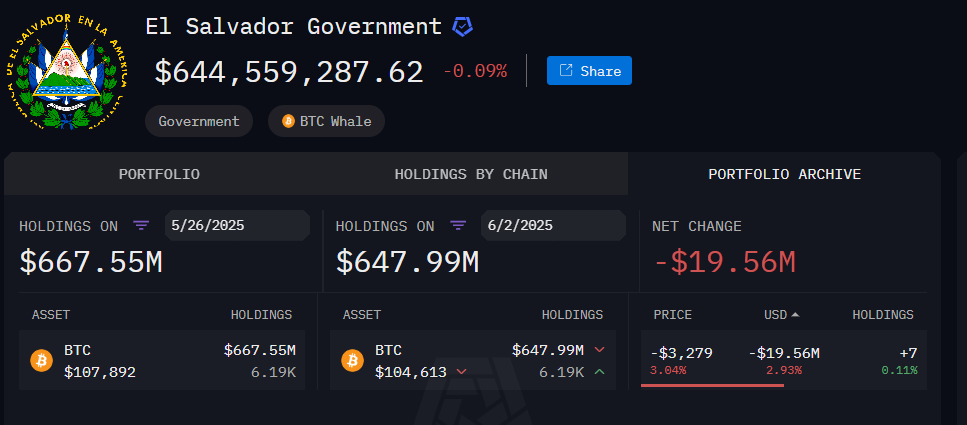
Reserves can be tracked using blockchain explorers, tools showing real-time transactions, and public data applications such as Arkham Intelligence.
If a government or company claims to hold Bitcoin, you can verify it yourself. There’s room for guesswork. This on-chain transparency builds trust without needing third-party audits or reports.
Why are governments and institutions creating Bitcoin reserves?
With the announcement of the US strategic Bitcoin reserve, global economies are shifting as trust in traditional systems wavers and institutions start looking for alternatives.
Bitcoin offers something different: no central control, predictable supply, and global access.
By holding Bitcoin, governments and businesses send a message. They’re preparing for financial change, reducing reliance on other currencies, and betting on digital value. It’s just about hype. It’s out protecting wealth, gaining independence, and staying ready for what’s next.
When traditional tools feel shaky, Bitcoin becomes a new financial anchor.
- Hedge against inflation and currency devaluation
Inflation eats away at savings and currency value. When a country prints more money, its value drops—and that affects everything. Bitcoin, with its fixed supply, does not follow that script.
Holding it gives institutions a way to protect their reserves from being diluted. It’s a digital counterweight to inflation-heavy environments, especially in regions where local currencies lose value fast.
- Political signaling and economic independence
When a government adds Bitcoin to its reserves, it makes a statement. It signals a move away from reliance on global powers and traditional financial systems.
For countries under sanctions or facing economic pressure, Bitcoin offers an independent path. It can be accessed globally, is not limited to foreign banks, and can help project financial strength on new terms.
- Strategic asset diversification
Smart reserve management means not putting all your eggs in one basket. Bitcoin adds a new layer to that strategy. It’s correlated to traditional markets, meaning it moves differently from stocks or fiat currencies.
By including Bitcoin, institutions reduce exposure to single-market risks and tap into an emerging asset class that behaves on its terms.
The rise of Bitcoin Reserves in national strategies
The United States made headlines by announcing plans to establish a strategic Bitcoin reserve, recognizing the asset’s role in global finance.
While the federal government, particularly the U.S. central bank, remains cautious, U.S. states act independently.
States like Texas, Wyoming, and Florida have pushed forward with pro-Bitcoin legislation and initiatives to explore BTC-backed treasuries.
This federal-state divergence reflects a broader trend: Bitcoin is being treated as a hedge and strategic asset by national governments and local jurisdictions with financial autonomy. The move signals growing U.S. interest in decentralized reserves amid inflation, geopolitical risk, and dollar fatigue.
As countries like El Salvador, Germany, and Russia deepen their crypto holdings, the U.S. positions itself across multiple fronts, not through a single unified strategy, but through layered and parallel adoption.
Who is holding Bitcoin reserves today?
Bitcoin reserves aren’t a theory, they’re already happening. Some countries have started to hold Bitcoin officially, and private companies are doing the same.
The list keeps growing, from national treasuries to corporate balance sheets. It’s not just tech firms, either.
Media companies, financial giants, and even small nations treat Bitcoin as a serious long-term asset.
Countries officially holding Bitcoin
As of 2025, Bitcoin has quietly entered the reserve strategies of several nation-states. Some acquired it through cybercrime seizures, while others mined or bought it directly.
Few admit it openly, but blockchain activity and official reports offer enough clues to determine who holds Bitcoin.
Confirmed (or strongly indicated) holders:
- United States
- Estimated holdings: 200,000+ BTC
- Mainly through major law enforcement seizures (e.g., Silk Road, Bitfinex hack).
- While the U.S. government has auctioned off portions but continues to retain a large reserve, beyond federal holdings, several states have started to assert their own Bitcoin strategies.
- Texas has proposed creating a state-backed gold and Bitcoin depository. Wyoming has passed multiple crypto-friendly laws, aiming to become a hub for digital asset banking. Florida’s leadership has publicly supported Bitcoin integration into state-level financial systems.
- Germany
- Estimated holdings: Tens of thousands of BTC
- Crypto seized from cybercrime operations.
- Similar to the U.S., Germany occasionally liquidates but still holds substantial amounts.
- El Salvador
- Estimated holdings: ~2,800+ BTC
- Direct purchases through the national treasury.
- Note: The first country to adopt Bitcoin as legal tender in 2021, it continues to DCA regularly.
- Bhutan
- Estimated holdings: Undisclosed
- Through state-run hydro-powered mining.
- The royal government’s investment arm, Druk Holding & Investments, mines BTC quietly.
- Russia
- Estimated holdings: Unclear; likely held by state-linked entities
- Possibly via mining and sanctioned institutions. While the central bank resists Bitcoin, strategic actors may accumulate it under the radar.
- Ukraine
- Estimated holdings: Limited direct state holdings
- Primarily via donations and aid during wartime. During its conflict with Russia, BTC also played a crucial role in Ukraine’s digital fundraising.
- Pakistan
- Estimated holdings: Bitcoin reserves — Number: Undetermined
- Plans to integrate BTC into its national financial framework
- Venezuela
- Estimated Holdings: Not officially disclosed
- Through government-linked mining operations.
Speculative or indirect BTC holders
- Iran: State-supported mining and rumored BTC reserves are used for international trade workarounds.
- North Korea: Linked to BTC holdings via cyberattacks by groups like Lazarus.
- China: Though crypto is banned domestically, authorities may retain seized BTC or have exposure through proxies.
Recent institutional additions
May 2025, Trump Media reported raising over $2.5 billion to build a Bitcoin treasury, marking a rare move for a political media company.
The very same week, GameStop, after a turbulent few years, also joined the list, investing over $500M in 4710 BTC, signaling a shift in its corporate strategy toward digital assets.
MicroStrategy, however, remains the most aggressive. The firm keeps stacking Bitcoin, using cash and debt to grow its reserve, which now stands at over 200,000 BTC.
These moves are unusual—they reflect growing confidence in Bitcoin as a financial asset that can complement traditional holdings and still offer long-term upside.
Public companies with significant BTC holdings
In 2025, following a hot streak, more companies will make bold moves into Bitcoin.
GameStop revealed its first major crypto play, acquiring 4,710 BTC worth over $500 million, a dramatic shift in the retailer’s strategy.
Trump Media, parent of Truth Social, announced a bold 2025 plan to raise $2.5 billion for a strategic Bitcoin treasury, targeting over 22,500 BTC at current prices. This initiative is one of the most significant corporate crypto initiatives to date.
Japan’s Metaplanet confirmed fresh BTC purchases in April and is targeting 10,000 BTC by year-end. Semler Scientific added 1,100 BTC in Q1 and filed to raise $500 million for further acquisitions.
Tesla hinted at renewed interest in digital assets during its latest earnings call, while Microsoft is reportedly exploring a Bitcoin allocation as part of broader treasury diversification discussions.
These purchases reflect a growing trend: publicly traded companies are embracing Bitcoin as a hedge and a central balance sheet asset.
| Entity | Bitcoin holdings | Date acquired | Purpose/Strategy |
| GameStop (GME) | 4710 BTC | May 2025 | Company diversification is part of a new corporate shift |
| Trump Media | ~22500 BTC (Planned) | May 2025 | $2.5B announced to build Bitcoin Treasury |
| Coinbase Holdings (COIN) | ~9,000 BTC | 2021–Present | Operational reserve |
| MetaPlanet Japan | 10000 BTC (Planned) | 2025 (Ongoing) | Actively acquiring BTC as part of a long-term corporate treasury strategy |
| Semler Scientific | ~ 1100 BTC | 2025 | Initial acquisition; also filed to raise $500M for further BTC purchases |
| MicroStrategy (MSTR) | 450,000+ BTC | Ongoing (2020–2025) | Long-term store of value |
What are the benefits and risks of a Bitcoin Reserve?
Holding Bitcoin as a reserve can be a bold financial move, with promise and uncertainty.
It offers the chance for long-term gains, but comes with unique risks. You’ll need to weigh the upside of digital scarcity against real-world volatility and regulation.
Bitcoin has a fixed supply, only 21 million will ever exist. That scarcity is built into the code. As demand grows and supply stays limited, prices can rise. This has made Bitcoin appealing to those looking for long-term value.
On the downside, Bitcoin can swing wildly in short periods, making it risky for conservative treasuries. Crypto bans or regulations can also add pressure.
Then there’s custody: storing Bitcoin securely isn’t easy. From cold wallets to multi-signature systems, mishandling reserves could mean permanent loss. Holding Bitcoin isn’t just about belief—it’s about strong operational security too.
Regulatory grey zones
There’s a universal rulebook for Bitcoin reserves. However, some countries are more crypto-friendly than others.
This uncertainty makes it challenging for institutions to plan long-term. Accounting rules, tax treatment, and reporting standards can vary widely.
With no consistent global rules, Bitcoin holders (governments and companies) face high-risk, unprecedented situations.
FAQs
What is a Bitcoin Reserve?
Why are countries like El Salvador holding Bitcoin?
What are the risks of holding Bitcoin as a reserve?
References:
In Global First, El Salvador Adopts Bitcoin as Currency | The New York Times
Bitcoin surges to all-time peak as crypto sentiment improves | Reuters
Bitcoin Whale Holdings Surge Past 100K BTC | Binance
How much Trump’s? Crypto reserves will hold in bitcoin and other coins | The Washington Post