Europe eyes Ethereum and Solana for its digital euro launch, challenging U.S. dominance in digital money
In recent weeks, the European Central Bank and EU policymakers have accelerated plans for a digital euro, with discussions underway on whether public blockchains such as Ethereum (ETH) and Solana (SOL) could be used for its issuance and settlement, according to the Financial Times.
The urgency for the move is driven by one clear reason: the U.S. dominates the stablecoin market, with more than 95% of the $255 billion in circulation backed by the dollar. Europe is now exploring a bold alternative to remain competitive and safeguard its monetary independence.
The GENIUS effect: Europe’s stablecoin wake-up call
Europe is moving faster on its digital euro plans following the passage of the U.S. GENIUS Act in July 2025, which set strict requirements for stablecoin issuers in the United States, mandating full-reserve backing, licensing, and greater transparency.
This strengthens the dominance of USDT and USDC, with dollar-pegged stablecoins now accounting for nearly 99% of the $219–$255 billion global market, according to the Bank for International Settlements (BIS).
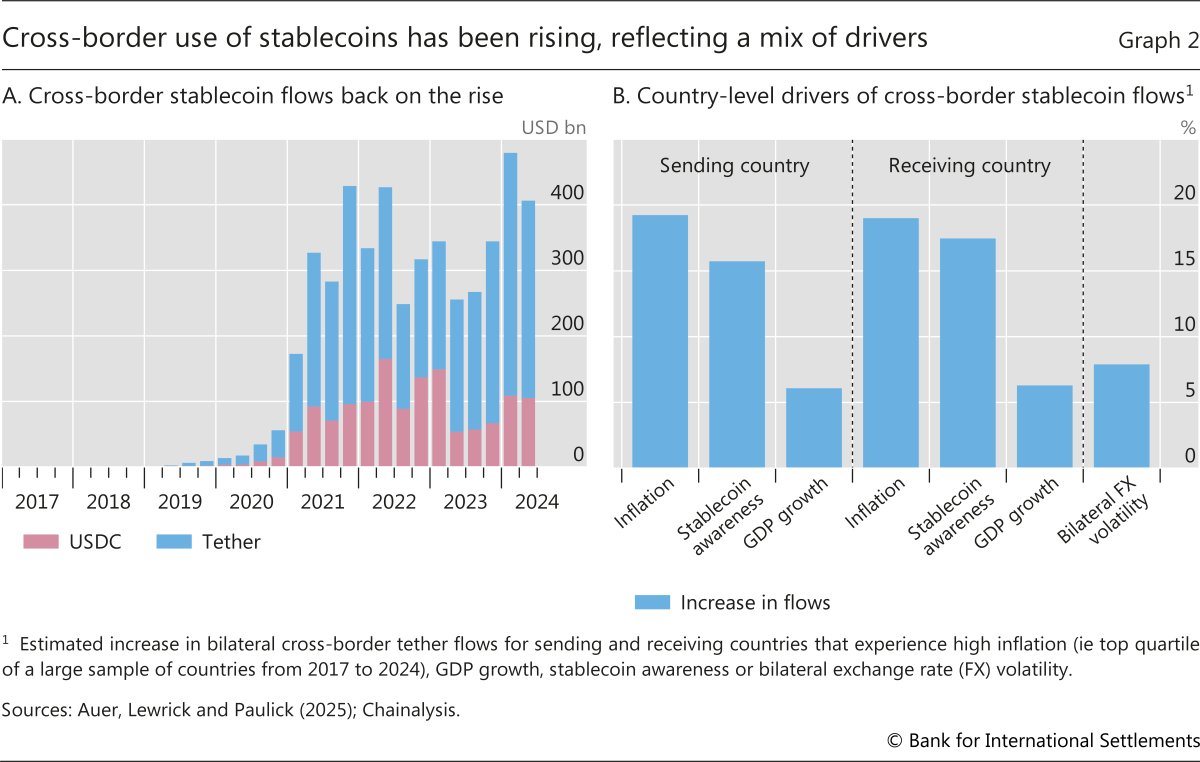
Source: Bank for International Settlements
For the Eurozone, the stakes are clear. European Central Bank (ECB) board member Piero Cipollone has warned that dominance by dollar-backed tokens could crowd out the euro, pushing European users into U.S.-based digital transactions and eroding the euro’s relevance.
In response to mounting pressure from global competitors, EU policymakers are reconsidering their initial strategy of launching the digital euro on a closed centralized system. China has already rolled out its digital yuan at scale, while the United Kingdom is advancing trials of a digital pound.
In the U.S., the stablecoin market is dominated by private issuers like Circle and Tether, while major banks, including Citi and JPMorgan, are developing their own digital tokens.
Although some euro-backed stablecoins exist, they remain marginal. ECB officials believe a digital euro would strengthen Europe’s role in money and reduce reliance on foreign-issued digital assets.
No final decision has been made, but the EU’s move toward public blockchains signals its intent to keep the euro relevant in a fast-changing financial system.
On July 16, the European Central Bank had issued its third progress report, showcasing ongoing efforts on the digital euro rulebook, user testing, and pilot trials with about 70 financial institutions via its innovation platform.
The current preparation phase runs through October 2025. A decision on whether to proceed will be made by the ECB’s Governing Council. Any rollout, however, would still require formal legislation from the European Union.
Why Ethereum and Solana might be best for the digital euro
The contest over the future of digital payments is no longer about the tokens themselves but about the infrastructure that underpins them. As central banks refine their positions on monetary policy and legislation, momentum has already shifted toward private stablecoin issuers and public blockchain networks that are actively remapping the global financial landscape.
With stablecoin issuance accelerating, even the largest issuers—Tether and Circle—are building high-performance settlement networks of their own. This shows why the debate over settlement rails is critical: whoever controls these rails will ultimately dictate how trillions in digital value move across borders over the next decade.
Comparative Performance Metrics
| Feature | Solana | Ethereum |
| Finality Time | ~12.8 seconds (optimistic: ~0.5–0.6 s) (Chainspect) | ~13–15 minutes (probabilistic) (inevitableeth.com) |
| Block Time | ~0.39 seconds (Chainspect) | ~12 seconds (Wikipedia) |
Against this backdrop, Ethereum and Solana stand out as leading contenders for the European Central Bank’s digital euro. Ethereum’s edge lies in its reputation as the most battle-tested and secure programmable blockchain, a network that already supports regulated stablecoins such as USDC, the euro-denominated EURe, and PayPal’s PYUSD.
Solana, meanwhile, offers a different value proposition; with near-instant block times and transaction costs a fraction of Ethereum’s, Solana provides the technical scale necessary for mass adoption of stablecoin payments across retail, business-to-business, and remittance channels.
The comparison underscores a central trade-off:
- Ethereum offers unmatched security, decentralization, and regulatory credibility, making it the conservative yet trusted choice for a digital euro.
- Solana delivers speed, efficiency, and user-level scalability, aligning with Europe’s need for cost-effective payment rails that can handle mass adoption.
In practice, Europe may not need to choose one over the other. A multi-chain digital euro framework, interoperable across both Ethereum and Solana, could allow the ECB to leverage Ethereum’s security guarantees while harnessing Solana’s performance advantages.