Gambling addiction statistics show a serious problem that’s affecting people all over the world. Millions are losing money, relationships, and even their health because of gambling-related harm.
In this article, we explore the numbers behind the issue: gambling addiction prevalence, key risk groups, and how things differ across countries. You’ll also find insights on online gambling addiction statistics and what’s being done to help.
- Show Full Guide
Gambling Addiction Statistics Worldwide
Gambling addiction statistics worldwide show that this isn’t just a local issue – it’s happening everywhere.
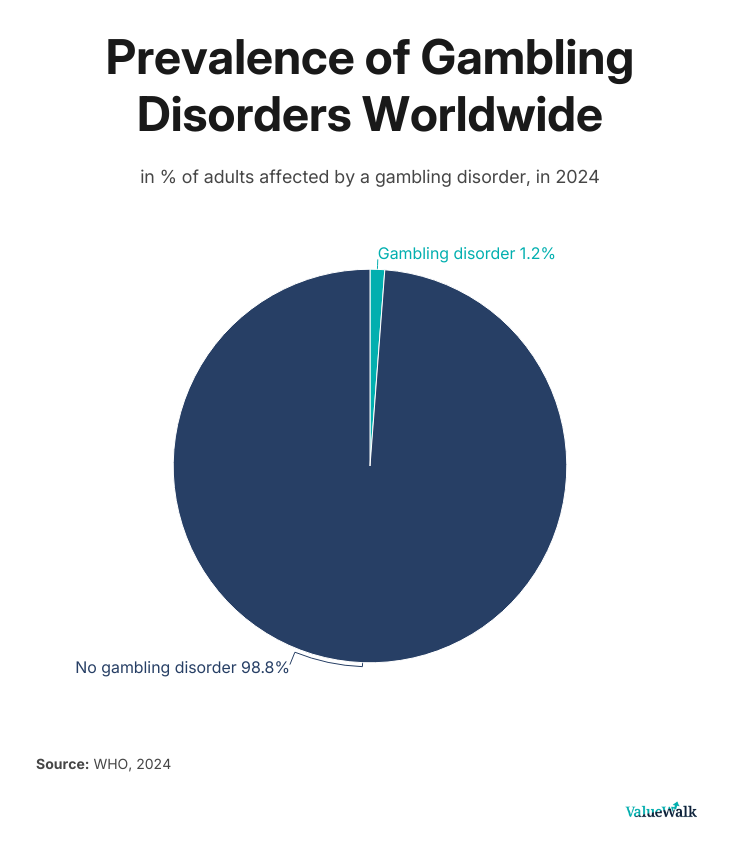
According to the World Health Organization, around 1.2% of adults globally meet the criteria for a gambling disorder (WHO, 2024). That might not sound like much, but it adds up to millions of people struggling with real-life consequences.
At the same time, people gambling at harmful levels were responsible for 60% of total gambling losses, proving the financial risks linked to addiction.
As gambling becomes easier to access through mobile apps and online platforms, countries around the world are seeing a rise in gambling-related harm. Here’s a look at how things compare across different regions.
Gambling Addiction By Country
- United States: In the U.S., millions of people are affected by gambling-related harm, making it one of the most impacted countries worldwide. Young adults and online gamblers are most at risk, and the country faces more than $14 billion in gambling-related social costs (NCPG, 2025).
- Australia: Australians lose roughly $25 billion every year on gambling, more than any other country when adjusted for population. This includes everything from pokies to online betting (AIFS, 2023).
- United Kingdom: Recent gambling addiction statistics show that the overall problem gambling rate is holding steady at 0.3%. The share of people at moderate risk remains at 1.2%, while another 1.8% are considered low-risk gamblers (Gambling Commission, 2023).
- Canada: Nearly 65% of adults said they gambled in the past year. Canada’s moderate to severe gambling addiction rates are estimated at 1.6%, affecting around 300,000 people (Statistics Canada, 2022).
Gambling Addiction Statistics in the United States
Gambling addiction statistics in the U.S. reveal just how common gambling addiction is, helping us understand how many people are addicted to gambling and how the numbers vary by risk level.
Around 85% of Americans have tried it at least once, and about 60% have gambled within the last year (NCPG, 2025).
That’s a big share of the population, raising serious questions about how common gambling addiction is today. For many, it’s just a casual activity – but for millions, it turns into something more serious.
Each year, roughly 2.5 million adults in the U.S. are diagnosed with a severe gambling disorder. Another 5 to 8 million people deal with mild or moderate gambling problems, which still affect their relationships, finances, and well-being.
So if you’re wondering how many Americans are addicted to gambling, the answer adds up to millions: roughly 7.5 to 10.5 million people.
When looking at gambling addiction demographics, some groups face more risk than others. Young adults, especially men between 18 and 30, are much more likely to experience gambling-related harm.
Statistics on Gambling Addiction by Age
Statistics of gambling addiction show that age makes a big difference in who’s most at risk, and the numbers are highest among young adults.
In the U.S., men aged 18 to 30 are the most affected. In 2024, 45% of young men said they’d experienced at least one gambling-related problem. Around 10% of them met the criteria for gambling addiction, which is well above the national average percentage of population with gambling addiction (around 3%) (FDU Poll, 2024).
For young women, the figure was lower but still concerning, at 7%.
It’s also worth noting that teenagers and children are more likely than adults to develop gambling problems, and those who start gambling at a young age have a higher chance of becoming addicted later in life (NCPG, 2025).
While not everyone develops full-blown addiction, such studies help us see what percentage of gamblers are addicted based on risk scoring.
Gender Differences in Addiction Rates
Gambling addiction facts show that men and women often gamble in different ways, and the risks aren’t the same for both. Men are more likely to take part in high-risk gambling, like sports betting, online games, or slot machines.
In 2024, about 15% of men in the U.S. placed bets on sports, compared to just 6% of women (FDU Poll, 2024). Women, on the other hand, tended to prefer scratch cards and slot machines, which might seem less risky but can still lead to addiction over time.
This gender difference also shows up in the data on gambling-related harm. Globally, around 11.9% of men experience some level of gambling harm, compared to 5.5% of women (WHO, 2024).
And when it comes to seeking help, the gap is just as clear: 67% of people in treatment for gambling addiction were men (QuitGamble, 2024).
Women are still affected, but they’re often more likely to seek help through online support rather than in-person services.
Looking at the overall percentage of gambling addicts, it’s clear that men are more often impacted – but both genders need tailored support. Understanding these patterns is key to improving treatment options and helping more people access the help they need.
Gambling Addiction Impact by Race
Gambling addiction statistics suggest that gambling behavior and its impact don’t look the same across different racial and ethnic groups.
In 2024, in the U.S., more than half of Hispanic respondents (52%) said they had bought a lottery ticket in the past year. That figure was 44% for Black respondents and 41% for white respondents (FDU, 2024).
But when it comes to actual harm, the gaps widen.
About 30% of Black respondents and 32% of Hispanic respondents reported three or more problem gambling behaviors. These included things like feeling anxious after gambling, chasing losses, or borrowing money to place bets. In comparison, just 18% of white respondents said the same.
These gambling addiction stats show that some communities are facing more harm than others. And since access to support often depends on things such as income, education, and healthcare, these groups may also be less likely to get help.
Gambling Addiction and Mental Health
There’s a clear connection between gambling addiction and mental health. People who struggle with gambling often deal with emotional issues, too, especially depression, anxiety, and a constant sense of stress.
In the U.S., 69% of problem gamblers said they had experienced severe depression or anxiety in the past year. For many, the mental strain is just as severe as the financial one (QuitGamble, 2024).
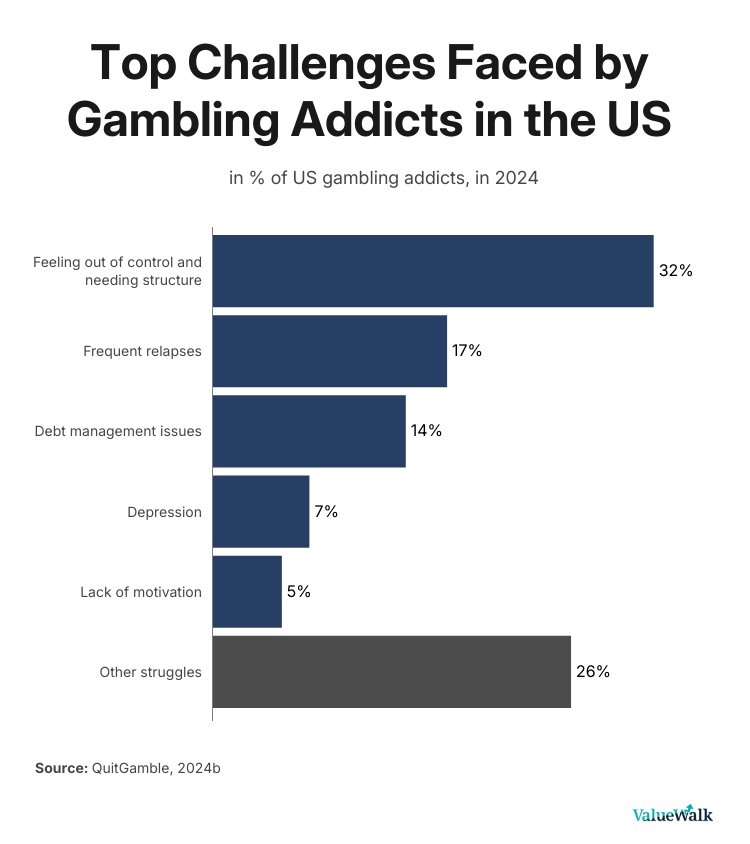
Some of the most common struggles include a feeling of losing control. About 32% of people said they often felt like they couldn’t stop gambling, even when they wanted to, and 17% reported frequent relapses.
It’s also common for gambling addiction to occur alongside substance abuse. Some people turn to alcohol or drugs to cope, which only makes things worse and makes recovery more difficult (NCPG, 2025).
These gambling addiction stats highlight how important it is to treat both the addiction and the mental health challenges that come with it. Without the right support, it’s easy to get stuck in a cycle that’s hard to break.
Online gambling addiction statistics show that betting online is more likely to lead to addiction than gambling in person.
In 2024, 81% of people with gambling problems said they had gambled online, while only a small number used land-based casinos. In the U.S., 68% of online sports bettors showed at least one sign of gambling addiction (FDU Poll, 2024).
The financial impact is just as serious.
Around the world, 73% of gambling addicts reported having debt (QuitGamble, 2024). In the U.S., the social cost of problem gambling was estimated at $14 billion in 2023. This includes things such as lost work, healthcare, legal costs, and support services (NCPG, 2025).
There are also differences between men and women when it comes to debt. Men were more likely to owe money to bookmakers or betting sites, while women were more likely to run up credit card debt because of gambling (QuitGamble, 2024).
However, the damage doesn’t stop at money. Gambling addiction has also been linked to family violence, child neglect, fraud, and even corruption in some countries (WHO, 2024). These are real problems that affect not just individuals but entire communities.
These gambling addiction stats highlight how quickly the risks grow when gambling moves online. As access gets easier, gambling addiction prevalence continues to rise, and the effects go far beyond just losing money.
Gambling Addiction Stats on Treatment and Recovery
Most people with a gambling problem never get the help they need.
According to gambling addiction treatment statistics, only 0.14% of people with gambling-related issues seek support (WHO, 2024).
Another study found that in 2024, 80% of people with gambling problems didn’t ask for help at all (QuitGamble, 2024).
Shame and stigma are two of the biggest reasons why. People feel embarrassed about their gambling habits, and that stops them from talking about it or asking for help (WHO, 2024).
Another issue is how the gambling industry approaches prevention. Their focus on what’s called “responsible gambling” puts the full weight of responsibility on individuals instead of tackling the bigger picture, like how addictive their products can be or how easily people can lose control.
Casino and Sports Gambling Addiction Statistics
Some types of gambling are riskier than others, and casino games are at the top of the list. According to statistics on gambling addiction, slot machines are one of the most common triggers for people with gambling problems.
In 2024, 72% of gambling addicts worldwide said they used slot machines (QuitGamble, 2024). In fact, in the U.S., 91% of female gambling addicts named slots as their primary form of gambling (QuitGamble, 2024b)
Live casino games are also considered high-risk, especially when players gamble often or for long periods (QuitGamble, 2024).
Sports gambling addiction statistics show a similar pattern. Around 38% of gambling addicts globally placed sports bets (QuitGamble, 2024). However, in the U.S., the figure was 24% (QuitGamble, 2024b).
Sports betting is especially popular among men and younger adults, who are often drawn to fast results and real-time odds.
One area that’s growing quickly is esports betting. Among people aged 18 to 25 with gambling problems, 22% had placed bets on esports games like League of Legends or Counter-Strike (QuitGamble, 2024). As esports grows in popularity, this number could rise even further.
These trends point to a clear pattern: the faster and more exciting the game, the greater the risk. Whether it’s slots, live sports, or esports, these high-speed formats are strongly linked to rising gambling addiction prevalence.
Prevention and Help with Gambling Addiction
There’s no single solution for stopping gambling harm, but some tools and treatments are proving more effective than others.
One of the best prevention strategies is the use of mandatory pre-commitment systems. These require gamblers to set spending or time limits before they start, helping them stay in control (WHO, 2024).
Another helpful option is self-exclusion, which allows people to block themselves from gambling sites or venues – either for a set period or permanently.
When it comes to treatment, cognitive behavioral therapy (CBT) and motivational interviewing are among the most effective approaches right now. These therapies help people understand their triggers, change harmful habits, and build healthier coping skills.
Other options, such as self-help groups, medication, or support forums, are still widely used, but the evidence on how well they work is mixed. Online therapy is becoming more common, too, but one issue is that many people stop early, which limits its long-term success.
Although access to treatment isn’t always easy, early action can make a big difference. Knowing the risks and using the right tools is key to avoiding serious harm.
If you’re wondering how to deal with a gambling addiction, recognizing the signs early and taking that first step is what matters most. Some strategies are explored in more detail in our guide to responsible gambling tips.